No! You Don’t Need Real Estate to Have Good Credit
Meta Description:
Think you need a mortgage to build credit? Learn what “lack of real estate secured loan information” really means—and why it’s not hurting your approval odds.
What Does “Lack of Real Estate Secured Loan Information” Mean?
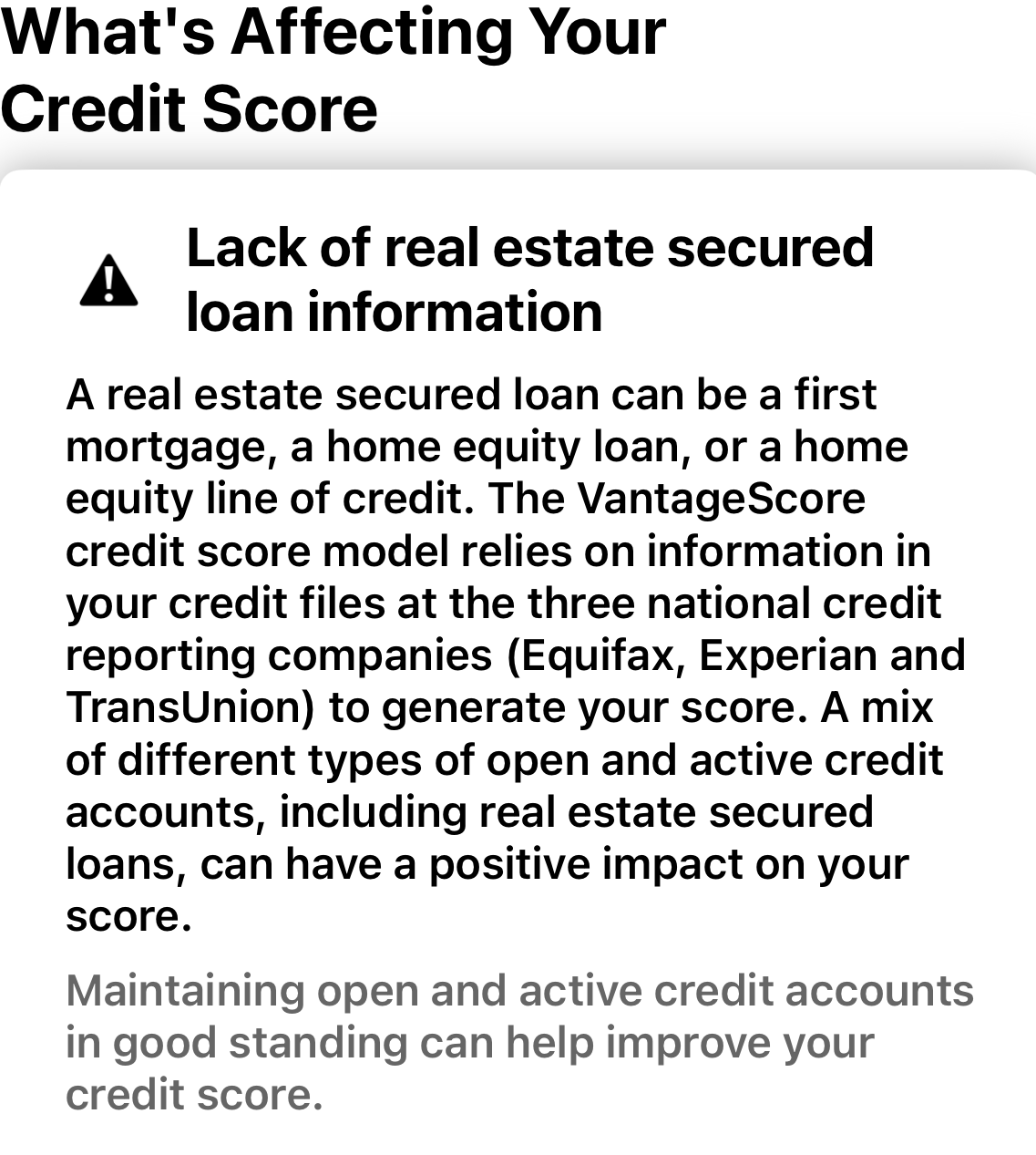
If you’ve ever checked your credit score and seen a message like:
“Lack of real estate secured loan information”…it can sound alarming.
You might wonder:
Am I being penalized for not owning a home? Is this why I was denied credit?
First of all:
No—you do NOT need real estate to have good credit.
What the Credit Model Is Actually Saying
This message typically comes from scoring models like VantageScore 4.0, and it simply means: You don’t currently have a mortgage, home equity loan, or HELOC on your credit report.
That’s it.
There’s nothing wrong with your credit—it’s just noting that your credit mix could be more diverse.
Credit Mix
What Is “Credit Mix” (And How Much Does It Matter)?
Your credit profile is made up of different types of accounts:
- Credit cards (revolving credit)
- Auto loans (installment loans)
- Mortgages (real estate loans)
In a perfect world, scoring models like to see a mix of these.
But here’s the key:
👉 Credit mix is a minor factor—not a major one.
It’s not what gets you approved or denied.
What Actually Determines Approval?
When a lender reviews your application, they care about:
- Payment history (Do you pay on time?)
- Credit utilization (How much of your credit are you using?)
- Debt-to-income ratio (Can you afford the debt?)
- Overall stability
Notice what’s missing?
👉 Owning real estate.
No lender is denying someone simply because they don’t have a mortgage.
Why This Message Can Be Misleading
Credit score apps are designed to give you insights—but sometimes they overemphasize things that don’t really matter.
This message is a good example.
- It’s not a warning.
- It’s not a problem.
- It’s just a data point.
Unfortunately, it can make people feel like they’re doing something wrong when they’re not.
Should You Get a Mortgage Just to Improve Your Credit?
Absolutely not.
Buying a home is a major financial decision—not a credit-building strategy.
If you’re not financially ready, taking on a mortgage could do far more harm than good.
What You Should Focus On Instead
If you want to improve your credit, stick to the fundamentals:
- Pay every bill on time
- Keep credit card balances low
- Avoid taking on unnecessary debt
- Build consistency over time
These are the things that truly move your score—and your financial life—forward.
Final Thought
Credit scores are tools—not rules.
And sometimes, they highlight things that sound important but really aren’t.
So if you see “lack of real estate secured loan information,” don’t stress.
A strong financial foundation will always matter more than a “perfect” credit profile.
And remember, most importantly: You’re worth more than your credit score!

Host, The Pink Money Podcast | Financial Educator
With over 20 years of experience in the financial services industry, Jerry has worked as a financial and wealth advisor, guiding individuals and families to grow and protect their wealth. His mission has always been clear: provide actionable advice, demystify complex financial concepts, and help people make confident, informed decisions.
Jerry earned his BS from St. Edward’s University in Austin, Texas, and his Master of Science in Personal Financial Planning from the College of Financial Planning. Today, he uses that background to not only cover practical money topics but also to explore cultural conversations, personal growth, and the ways financial choices intersect with identity and community.
When he’s not podcasting, Jerry enjoys writing think pieces, curating Jerry’s Playlist (a celebration of music and culture), and encouraging listeners to think critically about the world around them.

Beyond the 90 Days