Everything Should Have a Reason to Be in Your Life
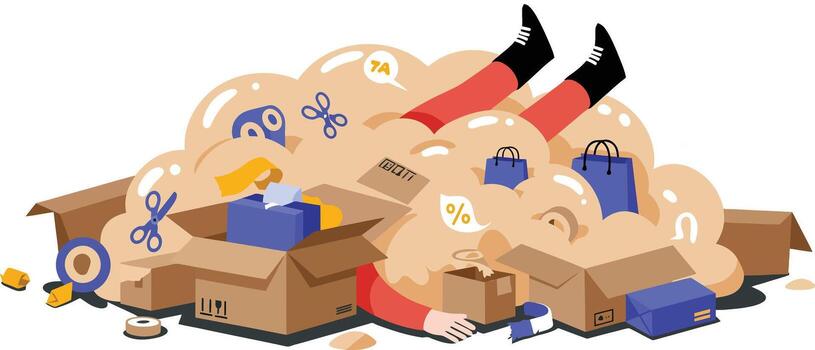
I used to think decluttering meant finding better places for things. Now I think it means deciding what deserves a place at all.
..
I woke up in the middle of the night recently and couldn’t go back to sleep.
For whatever reason, my mind landed on clutter.
I started thinking about all the things we accumulate over a lifetime, why we keep them, what they cost us to maintain, and why sometimes the hardest part isn’t organizing what we own but simply deciding that we don’t need to own it anymore.
Eventually I realized that instead of lying there thinking about it over and over again, I might as well get the thoughts out of my head.
Which, in a way, is exactly what this article is about.
Lately, I’ve been trying to simplify my life.
I don’t consider myself a minimalist, and I certainly don’t want to live in an empty house with twelve carefully selected possessions. I like things. I have sentimental things. I have things that make me happy simply because I enjoy owning them.
But I’ve started asking a different question about what I keep:
Why is this still here?
Over the years, I’ve accumulated a lot of stuff.
Some of it happened through ordinary life. I sold a couple of homes and combined their contents into one. I also inherited what felt like a semi-truck full of personal belongings from a friend who passed away.
None of it happened because I deliberately decided that I wanted a garage packed with things.
It just accumulated.
At different points, my garage became so full that simply moving around in it was difficult. Over the years, I slowly started whittling everything down.
I sold some things.
I donated some things.
I gave some things away.
And some things simply went into the trash.
I don’t have a philosophy that says everything should be donated or everything should be sold. I think the right way to let something go depends on what it is.
But I’ve discovered that one of the most satisfying ways to part with something is to know that someone else is actually going to use it.
Recently, I came across two DSLR cameras that I’ve owned for nearly twenty years.
I tried selling them.
They didn’t sell.
Eventually I stopped and asked myself: Why am I trying so hard to sell these?
If the goal is to get them out of the garage, then getting them out of the garage is the goal. Selling them is only one possible way of doing that.
So I started thinking about who might actually enjoy them.
I offered them to family members with children, thinking that one of the kids might be developing an interest in photography.
I barely had to ask.
One was already interested in photography. Another would love to have a camera. Suddenly, these cameras that had been sitting around unused had somewhere to go.
And that made me happy.
Maybe they’ll simply have fun taking pictures with them.
Maybe one of those cameras will end up sitting in another closet someday.
Or maybe, years from now, someone will remember that their uncle gave them their first real camera and that was where a lifelong interest in photography began.
Who knows?
The important thing is that the cameras have finished their useful life with me, but they may not have finished their useful life.
That distinction has become increasingly important to me.
We tend to think the cost of owning something is whatever we paid for it.
But everything we own continues to cost us something.
It takes up space.
We have to store it.
We have to remember that we own it.
Sometimes we have to clean it, maintain it, insure it, move it, organize it, or eventually figure out what to do with it.
Even a box sitting untouched in a garage can represent a future decision waiting to be made.
And those decisions accumulate too.
That’s where I think physical clutter becomes mental clutter.
You know you have something, but you can’t find it.
You know there are boxes that need to be gone through someday.
You know there are drawers you haven’t opened in years.
You know there are things you should probably sell, donate, repair, organize, or throw away.
Each one becomes a tiny piece of unfinished business.
Eventually you can have an entire house filled with unfinished decisions.
One of the things I’ve realized is that not everything we keep is something we actually decided to keep.
Sometimes it’s simply something we never decided to get rid of.
That may be one of the biggest ways clutter happens.
An object comes into our life for a perfectly legitimate reason. Years pass. The reason disappears, but the object stays.
Nobody ever stops to ask whether it still belongs there.
I’ve seen this recently while helping my mother go through some of her things.
She no longer wears most of her jewelry, for example, so we’ve gone through it and kept the pieces that are truly significant.
The rest doesn’t necessarily need to sit in a jewelry box forever simply because it once belonged to her.
Some of her costume jewelry is going to younger family members.
To an adult, it may simply look like an old box of costume jewelry.
To a child, it could be treasure.
And I like that.
Sometimes letting go doesn’t mean an object has reached the end of its life.
It may simply have reached the end of its life with you.
A box of jewelry that no longer gets opened in one house may become something a child plays with, wears, sorts through, and remembers.
A camera sitting unused for years may become somebody else’s first camera.
There is something satisfying about putting useful things back into circulation.
At the same time, I’ve learned that sometimes preserving what is important actually means keeping less.
If everything is important, eventually nothing feels particularly important.
Keeping the most meaningful pieces of jewelry instead of every piece allows those few items to stand out.
The same idea applies to paperwork.
As my mother has gotten older and I’ve taken over more of her financial affairs, I’ve become much more conscious of how much paper a lifetime can generate.
There are obviously documents worth keeping.
Birth certificates.
Marriage certificates.
Death certificates.
Legal documents.
Certain financial records.
Those things matter.
But I don’t want ten irrelevant pieces of paper surrounding the one document I may actually need someday.
Important things should be easy to identify.
They should be easy to find.
And clutter isn’t always physical.
We can accumulate financial clutter too.
Maybe it’s a stock purchased years ago.
A little cryptocurrency sitting somewhere.
An investment that was inherited.
An old retirement account from a former employer.
A bank account that is barely used.
None of those things are automatically bad simply because they are old or small.
And certainly an investment shouldn’t be sold just because its value has declined.
But occasionally I think it’s worth asking the same question about financial assets that I ask about physical possessions:
Why do I still own this?
What purpose does it serve?
Is it still part of a plan?
Would I deliberately choose to own it today?
Or is it simply something I acquired years ago and never thought about again?
And if I’m not paying any attention to it, who is?
Sometimes our financial lives need the same kind of cleaning out as our garages.
Not because everything old needs to disappear, but because everything we retain should have a reason for being there.
That may be why I find shows like Hoarders so fascinating.
The situations are obviously extreme, but underneath them is something most of us can probably recognize.
People attach meaning to things.
Memories.
Money.
Possibility.
Identity.
Guilt.
And sometimes people become so determined to preserve their possessions that they end up destroying the very things they claim to value.
A treasured photograph gets buried.
A beautiful home becomes unusable.
Relationships deteriorate.
Possessions that were supposedly valuable become damaged because there are simply too many of them.
At some point, the person is no longer being served by their possessions.
They are serving the possessions.
Of course, most of us are nowhere near that extreme.
I’m certainly not.
But I think there is still a lesson there.
At some point, organizing more and more things becomes nothing more than organizing clutter.
Sometimes the answer isn’t another storage container.
Sometimes it isn’t another shelf.
Sometimes it isn’t a bigger closet.
Sometimes the answer is simply:
I don’t need this anymore.
The difference in my own garage has been remarkable.
Years ago, the garage primarily existed as a place to store things.
Now I can move around freely.
I can find things.
I enjoy being in there.
I joke that I could probably hold a small gathering in it now, and honestly, I probably could.
I didn’t just get rid of things.
I got the garage back.
And space, I’ve discovered, has value.
So does simplicity.
So does knowing where things are.
So does opening a drawer without having to dig through twenty things you no longer use.
So does knowing that the things you have chosen to keep actually mean something to you.
Maybe this is one of the lessons that comes with living long enough.
Possessions have a way of entering our lives much faster than they leave.
We buy things.
People give us things.
We inherit things.
We replace things and keep the old ones.
We move things from house to house.
We put things into boxes because we don’t know what else to do with them.
Eventually those boxes become a kind of archaeological record of our lives.
But not everything from our past needs to accompany us into our future.
I’m not trying to own as little as possible.
That isn’t the goal.
I’m trying to own things deliberately.
Things I use.
Things I value.
Things that hold a meaningful memory.
Things that make my life easier.
Things that simply make me happy.
Any of those is a perfectly good reason to keep something.
What I’m becoming less interested in are the things that no longer have a reason.
Things I don’t use.
Things I don’t particularly care about.
Things I’ve forgotten I own.
Things I’m keeping because I might need them someday, even though someday hasn’t arrived in twenty years.
Things I’m storing because figuring out what to do with them feels like too much trouble.
Those things begin to feel less like possessions and more like obligations.
And sometimes the best thing you can do with an object is let it go.
Sell it.
Donate it.
Give it to somebody who will enjoy it.
Put it back into circulation.
Or, when its useful life really is over, throw it away.
Because the goal isn’t simply to have less.
The goal is to reach a point where the things that remain have earned their place.
I’d like to be able to look around my home, my garage, my files, and even my financial life and say:
Everything here has a reason to be here.
Not because everything is perfectly organized.
Not because I’ve become a minimalist.
But because I have made a decision about what deserves space in my life.
And increasingly, I think that may be one of the most valuable things we can give ourselves:
More room for what still matters.

Host, The Pink Money Podcast | Financial Educator
With over 20 years of experience in the financial services industry, Jerry has worked as a financial and wealth advisor, guiding individuals and families to grow and protect their wealth. His mission has always been clear: provide actionable advice, demystify complex financial concepts, and help people make confident, informed decisions.
Jerry earned his BS from St. Edward’s University in Austin, Texas, and his Master of Science in Personal Financial Planning from the College of Financial Planning. Today, he uses that background to not only cover practical money topics but also to explore cultural conversations, personal growth, and the ways financial choices intersect with identity and community.
When he’s not podcasting, Jerry enjoys writing think pieces, curating Jerry’s Playlist (a celebration of music and culture), and encouraging listeners to think critically about the world around them.
A Little at a Time Can Hurt a Lot Less